


Blog
What Is a Textile Mill? Outputs, Capabilities, and QC
 February 12, 2026
 4 views
A textile mill is where fibers are turned into yarn and fabric, the starting point for apparel, home textiles, and many technical products. Knowing what mills do and what they do not do helps you evaluate suppliers faster, set realistic lead times, and avoid preventable issues from sampling through bulk production.
What Is a Textile Mill?
A textile mill is a manufacturing facility that produces yarn or fabric. Some mills also handle dyeing, printing, and finishing. In most supply chains, mills supply materials rather than finished garments. That is the main difference from a garment factory, which focuses on cutting, sewing, and assembling final products.
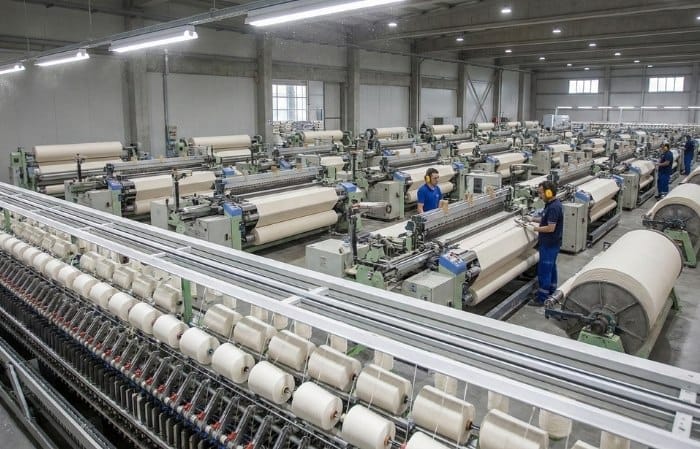
World First Modern Textile Mill
Many historians point to Cromford Mill (built in 1771 by Richard Arkwright) as the world’s first modern textile mill. Powered by water and organized around a centralized, mechanized spinning process, it helped define the factory model: machinery under one roof, standardized workflows, and labor coordinated at scale. That shift made yarn production faster and more consistent, and it set the template for textile mills that followed during the Industrial Revolution.
Outputs
Main Products
Textile mills typically produce yarn and fabric. Yarn may be spun from staple fibers such as cotton, or it may be filament yarn made from continuous filaments such as polyester. Fabric may be woven, knit, or nonwoven, depending on the end use and performance requirements.
You will also see the terms greige and finished fabric. Greige is unfinished fabric directly from a loom or knitting machine. Finished fabric has gone through dyeing and finishing steps to meet color, hand feel, and performance targets.
Common Fibers
Mills work with both natural and manmade fibers. Natural fibers include cotton, wool, linen, and silk. Manmade fibers include polyester, nylon, and viscose. Blends are common because they help balance cost, durability, moisture handling, wrinkle resistance, and hand feel.
Core Processes
Spinning
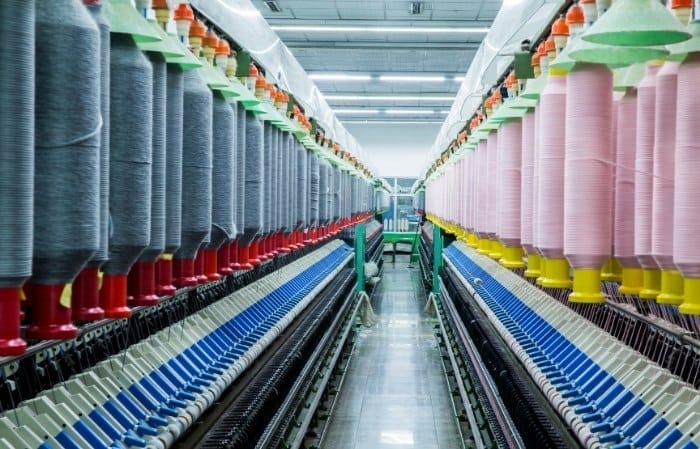
Spinning converts fibers into yarn. A typical line includes opening and cleaning, carding to align fibers, drawing to improve uniformity, then twisting and winding to form yarn. Mills control yarn specifications such as count, twist, strength, and evenness because these factors influence fabric appearance and downstream performance.
Weaving and Knitting
Weaving interlaces warp and weft yarns on looms to create stable structures used in products like sheeting and denim. Knitting forms loops, which usually adds stretch and comfort and is common in jersey and many performance fabrics. Construction choices affect drape, breathability, dimensional stability, and durability.
Dyeing and Finishing
Wet processing may include pretreatment such as scouring and bleaching, followed by dyeing or printing, then finishing. Finishes can be designed for softness, shrinkage control, wrinkle resistance, moisture management, or other functional properties. Strong process control at this stage is essential for shade consistency and repeatability in bulk production.

Mill Types by Capability
Spinning Mill
A spinning mill focuses on producing yarn from fibers. It may sell yarn to weaving or knitting mills, or to buyers that source fabric through separate suppliers.
Weaving or Knitting Mill
These mills turn yarn into fabric. Many buy yarn from spinners and concentrate on fabric construction, efficiency, and defect control.
Dyeing and Finishing Mill
A dyeing and finishing mill takes greige fabric and delivers finished fabric with the required color, hand feel, dimensional stability, and performance characteristics.
Integrated Mill
An integrated mill runs two or more stages under one operation, such as spinning plus weaving, or weaving plus dyeing and finishing. Integration can reduce handoffs, improve traceability, and shorten timelines when managed well.
Supply Chain Role
Where a Mill Fits
A common flow is fiber supplier to mill to cut-and-sew factory to brand or retailer. Depending on capability, a mill may deliver yarn, greige fabric, or finished fabric. Knowing which stage your supplier covers helps you plan approvals, testing, lead times, and accountability for defects.
What Mills Provide
Mills often support sampling, lab dips, and bulk production, along with QC reporting such as shade continuity checks and defect grading. For hospitality programs, alignment on construction, weight, width, shrinkage targets, and wash durability is critical because it affects room-to-room consistency and replacement matching.
QL Textiles supports commercial hospitality supply with stable specifications and coordinated production across core bedding categories. The team emphasizes practical material selection, consistent sizing standards, and repeatable bulk execution for hotel projects. Explore the hotel bedding linen range to see how mill-made materials translate into hotel-ready products and what information is typically needed for accurate quoting.
Conclusion
A textile mill produces yarn and fabric, and some mills also dye and finish materials to meet specific performance needs. Understanding what a mill makes, which processes it controls, and where it sits in the supply chain helps you choose the right partner and reduce avoidable delays and rework. For support aligning specifications, materials, and production planning for hospitality bedding, contact QL Textiles here: https://qltextiles.com/contact-us/
FAQs
Is a Textile Mill the Same as a Factory?
A textile mill is a type of factory, but it typically produces yarn or fabric rather than finished garments. Garment factories cut and sew finished items, while textile mills focus on fiber to yarn, yarn to fabric, and sometimes dyeing and finishing.
What Is an Integrated Textile Mill?
An integrated textile mill runs multiple stages under one operation. Common examples include spinning plus weaving, or weaving plus dyeing and finishing. This can improve coordination and traceability and may reduce lead times.
What Is Greige Fabric?
Greige fabric is unfinished fabric produced by weaving or knitting before dyeing, printing, and finishing. It is processed further to meet requirements for color, hand feel, and performance.
What Is the Difference Between a Spinning Mill and a Weaving Mill?
A spinning mill makes yarn from fibers. A weaving mill uses yarn to produce woven fabric on looms. Knitting mills also use yarn to make fabric, but they form loops instead of interlacing warp and weft.
Conclusion
A textile mill is where fibers are turned into yarn and fabric, the starting point for apparel, home textiles, and
Leave a Comment
 Feb 17, 2026