Blog
How to Choose Healthcare Linen for Better Patient Care?
 March 24, 2026
 8 views
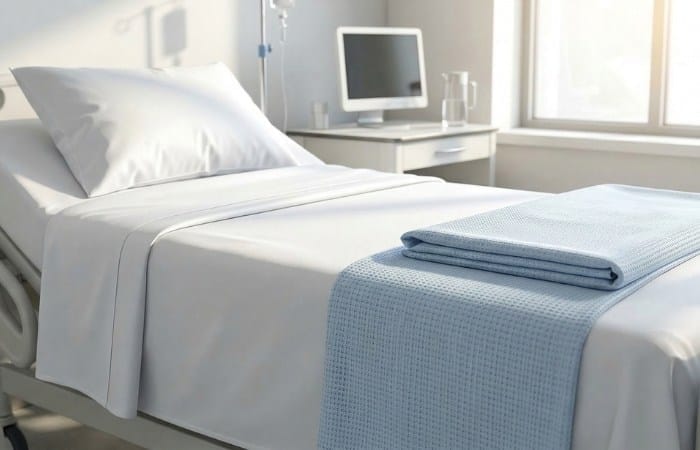
Healthcare linen does far more than cover a bed or complete a room setup. In hospitals and care facilities, it supports hygiene practices, patient comfort, smoother daily operations, and better cost control. When the right products are in place, the impact is felt across the entire care environment.
The Importance of Healthcare Linen
When people think about patient care, they usually think of doctors, nurses, medication, and medical equipment. Linen rarely gets the same attention. Yet it plays a constant role in how a facility functions day after day.
Infection Prevention
Healthcare linen supports a cleaner care environment because it comes into direct, repeated contact with patients, staff, and high-use areas. Bed sheets, pillowcases, blankets, and protective covers all need to be replaced on time, handled properly, and selected for reliable performance. If replacement cycles are inconsistent or worn items remain in circulation too long, hygiene becomes harder to maintain.
That matters.
Cleanliness is only part of the picture. Linen also needs to perform well under frequent laundering, move efficiently through daily use, and remain dependable after repeated washing. In healthcare settings, consistency is just as important as appearance.
Patient Comfort and Dignity
Patients notice fabric immediately. They feel roughness, stiffness, trapped heat, poor fit, or scratchy seams long before they say anything about them. Good healthcare linen should feel soft against the skin, allow airflow, absorb moisture, and fit the bed properly without constant shifting.
Comfort also has practical value. A patient who is already anxious, tired, or in pain does not need one more source of discomfort. Something as basic as breathable sheets or a better-fitting blanket can make daily care feel more respectful and less clinical. That is not a minor detail.
Staff Efficiency
Reliable linen supply affects operations more than many buyers expect. When nurses or support staff have to search for missing stock, wait for replacements, or work around inconsistent sizing, routine tasks take longer. Bed turnover slows. Room preparation becomes less predictable. Frustration builds.
Good linen will not solve every workflow issue. Still, it removes one that should be avoidable.

Key Requirements for Healthcare Linen
Not all linen is suitable for healthcare use. Some products may look acceptable at first, yet lose shape, wear out too quickly, or become harder to manage after repeated processing. Buyers need to look beyond first impressions and focus on long-term performance.
Hygiene Support
Healthcare linen should be suitable for frequent laundering and easy to manage in daily use. That means fabrics need to perform under repeated wash cycles without becoming unstable, overly rough, or difficult to replace in a fast-moving care environment.
Ease of management matters as well. Standardized sizes, consistent product specifications, and dependable replenishment make linen easier to sort, store, distribute, and replace. This helps staff work more efficiently and supports better routine control.
Durability
Durability is one of the most important purchasing factors, yet it is often undervalued. Linen in healthcare settings goes through intensive use. Repeated industrial washing, frequent bed changes, constant movement between departments, and regular handling all contribute to wear.
A durable product should hold its shape, maintain seam strength, and resist premature thinning. If linen deteriorates too quickly, replacement costs rise fast. What looks economical at the start may prove expensive in practice.
Comfort
Comfort still matters, even in highly practical purchasing decisions. Softness, breathability, and skin-friendly fabric performance can shape the patient experience every day. This is especially relevant in long-stay care, elder care, rehabilitation settings, and any environment where patients spend extended periods in bed.
The best products strike a balance. Durable, but not harsh. Practical, but still comfortable.
Sustainability
In healthcare linen, sustainability often comes down to product life. If an item lasts longer, needs to be replaced less often, and performs consistently across repeated wash cycles, waste decreases. So do avoidable purchasing disruptions.
That is the practical view.
A longer service life can help facilities reduce overall consumption and manage stock more efficiently, especially when purchasing in volume.

Common Linen Management Challenges
Even well-run facilities can face linen-related problems. Some are operational. Some are purchasing-related. Many involve both.
Shortages and Overstock
Shortages create immediate pressure. Beds cannot be prepared as quickly, staff lose time searching for stock, and departments start holding extra items just in case. Then the opposite problem appears. Overstock.
Without clear visibility into actual usage, facilities may under-order essential items while over-ordering slower-moving products. That ties up budget, storage space, and staff attention.
High Replacement Costs
Replacement cost is not limited to the unit price of a sheet or cover. Damage, loss, misuse, rough handling, and short product life all increase the real cost of linen ownership. A lower-priced product that fails too quickly can become the more expensive choice over time.
This is where buyers need to think beyond the quote.
Handling and Compliance Gaps
Poor handling can affect both hygiene and efficiency. If staff are dealing with inconsistent product types, unclear storage routines, or hard-to-manage stock, mistakes become more likely. Items may be misplaced, overused, or replaced too late.
Clear processes help reduce those errors. So does choosing linen that is easy to identify, distribute, and replace.
In-House vs Outsourced Management
There is no single answer here. Some facilities prefer direct internal control. Others want to reduce operational burden and rely on outside support. The better choice depends on scale, staffing, infrastructure, and service expectations.
In-House Setup
An in-house setup offers more direct control over stock, handling routines, and internal coordination. For larger facilities with established systems and laundry capacity, this may be a workable model.
But it comes with real requirements. Staffing, space, process discipline, inventory visibility, and consistent replenishment all need to work together. If one part weakens, the whole system feels it.
Outsourced Model
An outsourced model may improve consistency and reduce internal workload, especially for facilities that want more predictable support around linen supply and related operations. Of course, results depend heavily on service quality, response times, and overall reliability.
So yes, outsourcing can help. Only if the partner is dependable.
What to Compare
When comparing in-house and outsourced approaches, buyers should focus on total cost, quality consistency, delivery reliability, and internal labor demands rather than choosing based on headline pricing alone.
| Factor | In-House Management | Outsourced Management |
| Total cost | May include hidden labor, storage, and process costs | May offer clearer service-based budgeting |
| Quality consistency | Depends on internal controls and product selection | Depends on supplier and service reliability |
| Delivery reliability | Controlled internally but affected by staffing and stock accuracy | Tied to external partner performance |
| Internal labor needs | Higher day-to-day operational burden | Lower internal handling burden in many cases |
When evaluating product options within either model, it helps to review a dedicated healthcare linen collection so you can compare bedding categories, material options, and bulk-supply suitability in a practical way rather than relying only on generic specifications or brief supplier descriptions.
How to Evaluate a Linen Program
A linen program may appear functional on the surface while still hiding waste, avoidable shortages, or unnecessary staff burden. That is why periodic review matters.
Key Questions
Start with a few direct questions.
Are shortages affecting patient care or slowing room readiness? Is linen wearing out faster than expected? Are staff spending too much time locating stock, sorting inconsistent items, or dealing with preventable replacement issues? If the answer to any of these questions is yes, the program likely needs adjustment.
Useful Metrics
Useful performance indicators do not need to be complicated, but they do need to be tracked consistently.
| Metric | Why It Matters |
| Loss rate | Helps identify waste, misuse, or weak stock control |
| Replacement frequency | Shows whether product life meets expectations |
| Stock availability | Indicates whether departments have what they need when they need it |
| Delivery performance | Helps measure supply reliability and replenishment consistency |
Simple numbers. Clear signals.
Healthcare Linen Supplier
Choosing the right healthcare linen supplier is not only about finding a company that can manufacture bedding products. Buyers should also look at product consistency, bulk-order capability, available sizes and specifications, communication quality, and how well the supplier understands institutional use rather than standard retail demand.
A capable supplier should make purchasing easier, not more complicated. That includes helping buyers standardize product selection, maintain supply continuity, and source healthcare bedding that fits practical daily-use requirements instead of merely looking good in a catalog.

Conclusion
Healthcare linen supports more than basic room setup. It affects hygiene practices, patient comfort, staff efficiency, product life, and cost control across everyday operations. When buyers choose the right materials, sizes, and supply approach, linen becomes a practical asset rather than a recurring problem.
If you are reviewing current bedding options or planning a bulk purchase for healthcare use, you can request a quote to discuss product details, specifications, and supply needs with QL Textiles. It is a straightforward way to explore suitable options for your facility.
Conclusion
Healthcare linen does far more than cover a bed or complete a room setup. In hospitals and care facilities, it
Leave a Comment
 Mar 24, 2026