Blog
How is Polyester Manufactured? Understanding Polyester Manufacturing Process
 December 1, 2025
 173 views
Polyester is the workhorse of the modern textile industry. From high-performance athletic wear to durable upholstery and soft bedding, this synthetic fiber is ubiquitous in our daily lives. But unlike cotton or wool, polyester doesn’t grow in a field or on a sheep. It is a product of precise chemical engineering and manufacturing.
Here is an in-depth look at how raw chemicals are transformed into the versatile fabric we know today.
What is Polyester?
At its core, polyester is a category of polymers that contain the ester functional group in their main chain. While there are many specific types, the term “polyester” as a specific material most commonly refers to Polyethylene Terephthalate (PET).
Types of Polyester (PET, Variants)
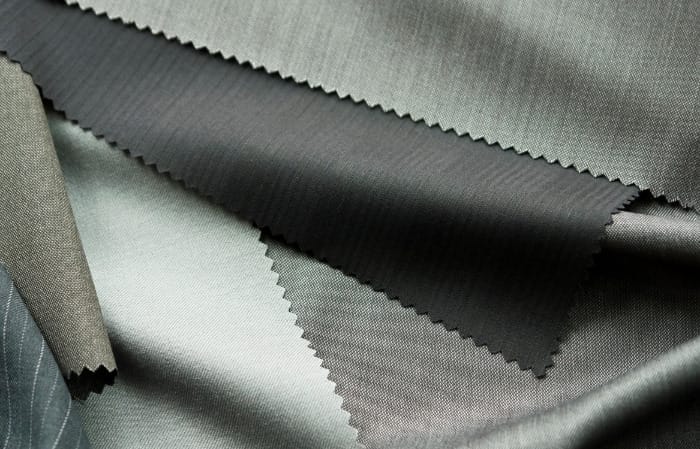
PET is the most popular form used in fibers and beverage bottles. It provides incredible strength and versatility. Another variant is PCDT (poly-1, 4-cyclohexylene-dimethylene terephthalate), which offers slightly more elasticity and resilience. PCDT is often preferred for heavier applications like upholstery and curtains, whereas PET is the standard for clothing and bedding.
Key Manufacturing Properties
Manufacturers love polyester because it is highly engineerable. Its key properties include:
- Hydrophobicity: It repels water, making it quick-drying.
- Durability: It resists stretching, shrinking, and abrasion.
- Thermoplasticity: It can be melted and reformed, allowing for heat pleating and easy recycling.
Raw Materials and Chemistry
The creation of polyester begins in a chemical plant rather than a textile mill.
Building Blocks: Ethylene Glycol, PTA/DMT
The process starts with two primary petroleum-based products. The first is Ethylene Glycol, a chemical derived from petroleum. The second is usually Purified Terephthalic Acid (PTA) or its derivative, Dimethyl Terephthalate (DMT). These serve as the fundamental building blocks of the polymer chain.
Polymerization Methods
These chemicals are mixed in a process called condensation polymerization. To do this, the acid and the alcohol are reacted in a vacuum at high temperatures.
The reaction releases moisture and creates a long-chain molecule. As the reaction progresses, the mixture transforms into a molten, honey-like substance. This is the polyester polymer.
Additives and Modifiers
Before the polymer hardens, manufacturers can introduce additives to change the final look or function of the fiber.
- Delustrants: Titanium dioxide is often added to reduce the natural shine of the plastic, making it look more like cotton or matte silk.
- Flame Retardants: Chemicals are added to improve safety standards.
- Colorants: Pigments can be added at this stage (solution dyeing) for excellent colorfastness.
Melt Processing
Once the polymerization is complete, the material must be processed into a usable form.
Melting, Extrusion, and Filtration
The molten polymer is pumped through filter packs to remove any impurities or unreacted chemicals. Consistency is vital here. If the mixture is not perfectly homogenous, the resulting thread will break during spinning.
Pellet/Chip Formation
While some facilities spin fiber directly from the polymerization vat, it is common to cool the molten plastic and cut it into small chips or pellets. These chips are easy to store, transport to different textile mills, and melt down again when needed.
Fiber Spinning
This is the stage where plastic chips become textile fibers.
Melt Spinning and Cooling
The polyester chips are melted down in a hopper. The thick liquid is then forced through a device called a spinneret.
Note: Think of a spinneret as a specialized showerhead with tiny holes. The shape and size of these holes dictate the shape and feel of the fiber.
As the liquid filaments emerge from the spinneret, they hit cool air and solidify almost instantly. This process is known as melt spinning.
Drawing and Texturing Methods
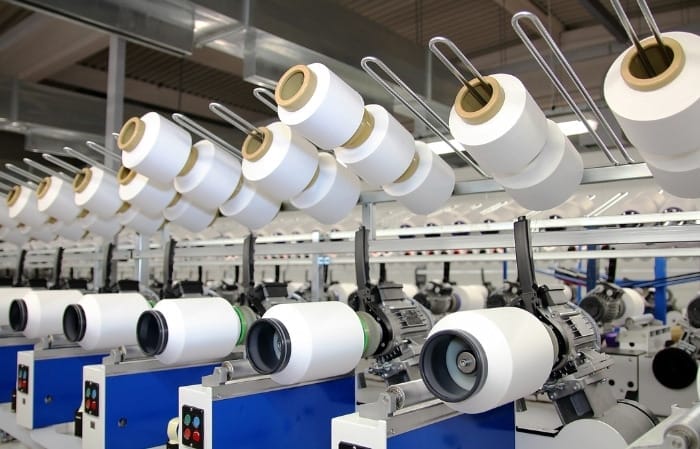
The fibers that come out of the spinneret are initially soft and weak. To strengthen them, they undergo “drawing.” The fibers are stretched to five or more times their original length. This aligns the polymer molecules into a parallel formation, significantly increasing strength.
Texturing is also applied here. The fibers might be crimped or twisted to give them bulk and loft, mimicking the feel of natural fibers like wool or cotton.
Filament and Staple Fiber Pathways
Polyester can be manufactured in two distinct forms depending on the intended final product.
Continuous vs. Staple Fiber Production
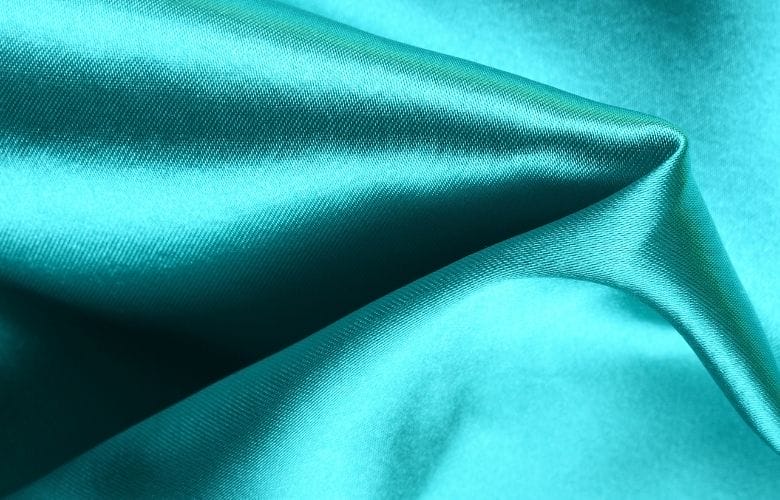
- Filament Yarn: These are long, continuous strands that go directly from the spinneret to a spool. They are smooth and strong, often used for silky fabrics or linings.
- Staple Fiber: These fibers are cut into short lengths (usually a few inches) and crimped. These short fibers are then baled and spun into yarn later, similar to how cotton is processed. This creates a softer, “fuzzy” hand feel suitable for blends.
Fabric Formation Methods
Once the yarn is created, it moves to fabric construction.
Weaving, Knitting, Nonwovens
- Weaving: Two sets of yarns (warp and weft) are interlaced at right angles. This creates stable fabrics like satin or poplin.
- Knitting: Yarns are interlooped. This creates stretchy fabrics ideal for activewear and t-shirts.
- Nonwovens: Fibers are bonded together chemically, mechanically, or thermally, often used for medical textiles or filtration.
Dyeing and Finishing
Raw polyester fabric is often naturally white or off-white. It needs finishing to become a consumer product.
Dyeing Methods and Heat-Setting
Polyester is difficult to dye with standard water-based dyes because it is hydrophobic. Instead, disperse dyes are used along with high heat and pressure.
Heat-setting is also crucial. Because polyester is thermoplastic, the fabric is passed through a heat chamber to permanently “lock” its width and stability. This prevents future shrinking.
Chemical and Mechanical Finishes
The final touches might include:
- Softening: To improve the touch against the skin.
- Anti-static treatments: To reduce static electricity buildup.
- Water-repellent coatings: For outerwear or performance gear.
Quality Control and Monitoring
Key Physical and Color Tests
Labs test the fabric for tensile strength, pilling resistance, and abrasion resistance. Colorfastness is also rigorously tested to ensure the dye does not bleed when washed or fade in sunlight.
Process Monitoring
Modern manufacturing uses automated sensors throughout the extrusion and spinning lines to monitor the diameter and temperature of the fibers in real-time. This minimizes defects and ensures uniformity.
Polyester’s Application in Bedding
One of the most significant evolutions in polyester manufacturing has been its adaptation for the bedding industry. While early polyester was criticized for being scratchy, modern manufacturing techniques—specifically the development of microfiber—have changed the game. By splitting polyester fibers into strands finer than silk and brushing the fabric surface, manufacturers can create sheets and duvet covers that feel incredibly soft and luxurious, often rivaling high-thread-count cotton.
Beyond the feel, polyester is prized in bedding for its practical benefits. It is inherently wrinkle-resistant, meaning sheets look crisp right out of the dryer without ironing. It is also hypoallergenic and resistant to dust mites, making it a healthy choice for sensitive sleepers. Because the fiber absorbs very little water, polyester bedding dries rapidly, saving energy and time during laundering for both households and large-scale hotels.
If you are looking for high-quality polyester bedding for hotels or home textiles, the quality of the manufacturing process makes all the difference.
Conclusion
The manufacturing of polyester is a fascinating blend of organic chemistry and mechanical engineering. By manipulating the polymer at the molecular level and controlling the physical spinning process, manufacturers can create fabrics that range from sheer and silky to thick and wool-like. For more information on high-quality polyester bedding, contact QL Textiles and get a free quote today.
FAQs
Is polyester manufacturing sustainable?
Traditional polyester relies on petroleum, which is a non-renewable resource. However, the industry is heavily shifting toward Recycled Polyester (rPET), which melts down existing plastic bottles to create new fibers, significantly lowering the carbon footprint.
Why is polyester sometimes blended with cotton?
Polyester contributes strength and wrinkle resistance, while cotton adds breathability and softness. Blending them creates a fabric that captures the best properties of both materials, known as poly-cotton.
Does polyester shrink in the wash?
Generally, no. Because the fiber is heat-set during manufacturing, it is highly resistant to shrinking compared to natural fibers like cotton or wool, provided it is washed according to care label instructions.
Can polyester feel like silk?
Yes. By using continuous filament yarns and shaping the fibers (modifying the cross-section) during the spinning process, polyester can be made to have a high sheen and a smooth drape that closely mimics natural silk.
Is polyester good for bedding?
Yes, modern polyester (often labeled as microfiber) is an excellent choice for bedding. It is highly durable, affordable, and easy to care for. Unlike early versions of the fabric, today’s high-quality polyester sheets are double-brushed during manufacturing to create a buttery-soft texture that is gentle on the skin. It is also inherently hypoallergenic, making it resistant to dust mites and mold.
What are the pros and cons of polyester bed sheets?
Pros:
- Durability: They resist tearing and pilling better than many natural fibers.
- Wrinkle-Resistant: They come out of the dryer looking smooth without ironing.
- Quick Drying: They absorb less water, reducing drying time and energy costs.
- Cost-Effective: They generally offer a lower price point than Egyptian cotton or linen.
Cons:
- Breathability: Pure polyester traps heat more than cotton, which may be uncomfortable for “hot sleepers.”
- Static: In dry climates, polyester can generate static electricity.
- Stain Removal: While they repel water-based stains, oil-based stains (like lotions) can be harder to wash out.
How do I choose the best polyester bedding?
When shopping for polyester sheets, ignore “thread count,” which applies mostly to cotton. Instead, look for GSM (Grams per Square Meter).
- 90–100 GSM: Lightweight and budget-friendly, good for summer.
- 110–120 GSM: High quality, thicker, and softer; this is the sweet spot for durability and comfort.
Brushed Finish: Always check if the packaging says “double brushed” or “peached,” as this mechanical finish ensures the fabric feels soft rather than slick or plasticky.
Recommended reading:
Conclusion
Polyester is the workhorse of the modern textile industry. From high-performance athletic wear to durable upholstery and soft bedding, this
Leave a Comment

 Mar 24, 2026