Blog
Hotel Linen Rental vs Buying: Which Is Better?
 August 20, 2025
 250 views
Hotels can source linen in two main ways: through a managed hospitality linen rental service or by purchasing and owning their own stock. The better option depends on budget, laundry setup, storage capacity, brand standards, and the level of control the property wants over quality, inventory, and long term cost.
What Is Hotel Linen Rental?
Hospitality linen rental is a service-based model in which a hotel receives linen from a provider on an ongoing basis instead of building and owning its own stock. Instead of buying and owning bed linen, a hotel receives linen from a provider on an ongoing basis. The supplier typically manages circulation, cleaning, and replacement under a service agreement.
In the UK market, this model is also commonly described as linen hire.

How Does Linen Rental Work?
In a rental model, the supplier provides items such as sheets, pillowcases, duvet covers, towels, and sometimes table linen or robes. The hotel uses the linen in daily operations, while the supplier collects soiled items, launders them, and returns clean stock on a scheduled basis.
Many rental programs also include the replacement of worn or damaged items. As a result, this model appeals to hotels that want to simplify operations and avoid managing large linen inventories internally.
Benefits of Linen Rental
The most obvious advantage of linen rental is the lower upfront cost. A hotel does not need to commit significant capital to build a complete linen inventory for every room.
Rental also reduces the administrative burden of inventory management. Because the supplier handles much of the circulation process, the hotel can spend less time forecasting stock levels and tracking linen movement.
In addition, rental can simplify daily operations. Hotels without in-house laundry, sufficient storage, or robust housekeeping resources often prefer this model because it reduces the demands associated with washing, sorting, replacing, and monitoring linen.
Cons of Linen Rental
The main disadvantage is reduced control. Hotels usually have less influence over fabric quality, finish, appearance consistency, and the overall feel of the linen used in guest rooms.
Customization is also more limited. Hotels that want specific fabrics, embroidery, branded presentation, or a distinctive room style may find rental programs too standardized.
Another consideration is linen rental cost, because the ongoing service fee continues throughout the contract and can add up over time. Although rental lowers the initial outlay, it creates recurring costs throughout the life of the contract. For some properties, those cumulative costs may eventually exceed the cost of ownership.
What Is Buying Hotel Linen?
Buying hotel linen is an ownership-based model. The hotel purchases its own linen stock and retains full control over what it uses, how it is maintained, and when it is replaced.
How Direct Purchasing Works?
Under this model, the hotel buys linen directly from a supplier or manufacturer. This typically includes sheets, pillowcases, duvet covers, mattress protectors, towels, bathrobes, and other room textiles.
Once the purchase is complete, the hotel owns the inventory. It can process the linen through an in-house laundry or work with an external laundry partner. The hotel is also responsible for reordering, replacing worn items, and planning stock levels based on room count, occupancy, and turnaround needs.
Benefits of Buying Linen
Buying gives hotels stronger control over quality. The property can choose the fabric composition, thread count, construction details, finish, and overall product standard that best supports its positioning.
It also makes it easier to maintain room to room consistency. For hotels that prioritize brand presentation, guest experience, and a uniform appearance across the property, ownership offers clearer standardization.
Customization is another major advantage. Hotels can specify size, fabric, colour, logo embroidery, and finishing details based on their brand image and operational needs.
Finally, buying provides stronger long term control over cost and replenishment. Once a hotel establishes the right inventory level and manages it well, the cost structure can become more predictable, especially for properties with stable occupancy and established operating systems.
Cons of Buying Linen
The first challenge is the higher upfront investment. Building enough stock for all rooms, along with backup inventory, can require a substantial budget.
Ownership also demands more storage capacity and more disciplined stock planning. Hotels need to manage PAR levels, monitor wear, and ensure that enough clean and usable linen is always available.
In addition, ownership brings full responsibility. When the hotel owns the linen, it must also manage loss, damage, replacement timing, and inventory accuracy.

Hotel Linen Rental vs Buying
The distinction between rental and buying becomes clearer when factors such as quality, operations, and linen rental cost are compared directly.
| Factor | Linen rental | Buying hotel linen |
| Initial cost | Lower upfront spend | Higher initial investment |
| Long term cost | Ongoing service fees | May offer better long term value |
| Quality control | More limited | Higher control |
| Customization | Usually limited | Easier to customize |
| Inventory burden | Lower | Higher |
| Laundry responsibility | Mostly supplier-led | Hotel-managed or outsourced |
| Brand consistency | More standardized | Easier to control |
Upfront and Long Term Cost
Rental is usually easier at the outset. Hotels do not need to invest heavily in a full linen inventory, which can be particularly helpful for smaller properties or operators trying to preserve cash flow.
Buying requires a larger initial purchase, but it may provide better long term value when linen rental cost is high over an extended contract period. For hotels with steady demand, reliable laundry support, and effective linen management, ownership can reduce dependence on recurring service fees and improve cost efficiency over time. Hotels comparing linen hire with direct purchase should look beyond the lower upfront cost and assess total cost over time.
Quality and Consistency
Buying is generally better for hotels that place a high value on product quality and presentation. When a hotel selects its own linen, it has more control over softness, fabric weight, construction, and appearance.
Rental can still meet acceptable standards, but it is usually less flexible. Because the model is designed around service efficiency, the hotel may have less control over exact product specifications and visual consistency over time.
Customization
Customization strongly favours direct purchase. Hotels that want logo embroidery, custom sizing, specific fabric blends, or a distinctive room aesthetic are usually better served by owning their linen.
By contrast, rental providers typically work with standardized stock. That supports operational efficiency, but it limits branding and specification options.
Operations and Inventory
Rental reduces the need to store and manage large volumes of linen on site. This is useful for properties with limited storage space or lean housekeeping operations.
Buying requires more planning and oversight. Hotels must calculate PAR levels, monitor stock movement, control losses, and schedule replacements. Although this adds operational responsibility, it also gives the property more direct control over linen management.
Laundry Responsibility and Usage Level
Rental is often the better fit for hotels that want the supplier to take on most of the laundry burden. It suits properties that do not want to manage laundry logistics closely.
Buying works better when the hotel already has a dependable laundry setup, whether in-house or outsourced. It is also often more effective for hotels with stable and predictable usage patterns, because they can manage inventory more efficiently and plan replacement cycles more accurately.
Which Option Is Better for Different Hotels?
There is no universal answer. The right model depends on hotel type, operating structure, and commercial priorities.
When Rental Makes More Sense
Rental is often the better option for smaller hotels, guest houses, and properties with limited storage. It is also a practical choice for hotels that want operational simplicity and prefer not to manage linen circulation in detail.
Properties without in-house laundry, or without a dependable external laundry arrangement, may also benefit from rental. In these cases, the convenience of an integrated service can outweigh the loss of control.
Rental may also suit hotels that prioritize ease of administration over customization. If the goal is to keep operations simple and avoid a large initial purchase, the rental model can be a practical choice. For smaller properties, a well-structured hospitality linen rental program can reduce operational pressure and simplify linen control.
When Buying Makes More Sense
Buying usually makes more sense for boutique hotels, upscale properties, and brands that care about room presentation and product consistency. These hotels often want greater control over fabric feel, design details, and brand standards.
Large hotels and hotel groups can also benefit from ownership because they often have stronger purchasing power, more structured operations, and a clearer understanding of long term cost.
New hotel openings and renovation projects are another strong fit for direct purchase. At this stage, buyers often want to set room standards from the beginning, choose exact specifications, and align the linen program with the broader interior concept of the property.
Hotel Bed Linen Supplier from China
For hotels that conclude buying is the better model, sourcing directly from China can be a practical next step.
Why Some Hotels Buy Direct from China
One of the main reasons is bulk pricing. Direct sourcing can be more cost effective, especially for larger orders or multi-property projects.
Customization is another advantage. Hotels that need specific sizes, fabric blends, finishes, embroidery, or packaging often find factory-based sourcing more flexible than buying from a fixed stock program.
Direct sourcing can also provide greater control over specifications. Instead of selecting from a limited range, the buyer can develop products around the actual operational needs of the property.
QL Textiles
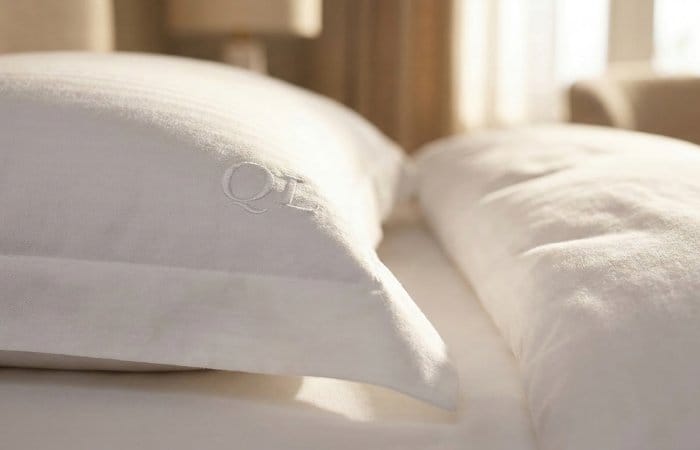
QL Textiles is a hotel bed linen supplier that supports hospitality buyers seeking direct manufacturing supply. The company focuses on hotel bedding products and is well suited to projects that require stable production, custom specifications, and bulk order support.
For hotels, resorts, and hospitality groups that want greater control over fabric, sizing, and brand presentation, QL Textiles offers a more direct sourcing route than a standardized rental model. This can be especially useful for new openings, refurbishment projects, and buyers looking to balance quality with factory-level pricing.

Conclusion
Hotel linen rental offers lower upfront cost and simpler day to day management, while buying provides stronger control, better customization, and potential long term value. The right choice depends on your hotel’s budget, operations, laundry setup, and quality expectations. To explore direct sourcing for your property, request a quote and receive a response within 24 hours.
Conclusion
Hotels can source linen in two main ways: through a managed hospitality linen rental service or by purchasing and owning
Leave a Comment

 Mar 24, 2026